


Every commercial lender maintains a documented credit policy. It outlines risk appetite, approval thresholds, industry limits, collateral requirements, and exception procedures. It is reviewed, approved, and updated to ensure consistent credit decision-making across the institution.
Yet even with well-defined policies in place, real-world decisions do not always align perfectly with written standards.
This disconnect is rarely intentional. In most cases, it stems from how policy is accessed and applied during daily underwriting activity. When answers are buried in PDFs, stored across SharePoint folders, or retained in the experience of senior analysts, applying policy consistently at the moment of decision becomes more complex than leaders anticipate.
The issue is not policy clarity. It is policy accessibility in real time. Over time, that gap can quietly introduce drift between documented standards and actual credit behavior.
Key Insights at a Glance
- Documented policy does not guarantee consistent application
- Policy drift often stems from accessibility gaps, not intent
- Knowledge silos increase interpretation variability
- Repetitive credit Q&A slows desks and raises cost per decision
- Source-cited, context-aware answers reduce interpretation drift
- Underwriting intelligence aligns daily decisions with written standards
The Subtle Nature of Policy Drift
Policy drift rarely presents as a clear violation. It appears gradually through small variations in interpretation and execution.
For example:
- A leverage threshold may be interpreted slightly differently across teams
- Exception documentation may vary by reviewer
- Industry adjustments may be applied inconsistently
- Similar borrower scenarios may produce slightly different risk conclusions
Individually, these differences may seem minor. Collectively, they introduce variability into credit decisions that can affect portfolio consistency, governance transparency, and operational efficiency. In many cases, drift occurs not because teams disregard policy, but because policy is difficult to navigate quickly and consistently in complex scenarios.
Commercial credit desks field a high volume of policy-related questions daily. Answers often reside in knowledge silos — across disconnected systems, stored documents, or individual experience. Even well-organized repositories can become difficult to search effectively under time pressure. When answers are not easily accessible, analysts rely on escalation, memory, or interpretation. This is where variation begins.

Why Accessibility Matters More Than Clarity
Most institutions invest heavily in drafting clear policies. Clarity is essential, but clarity alone does not ensure consistent application.
Underwriting decisions often occur in fast-moving environments. Analysts must resolve questions quickly while managing workload and borrower expectations. Searching manually through lengthy policy documents is time-consuming and increases the likelihood of inconsistent interpretation.
Common friction points include:
- Difficulty locating the relevant section within large policy documents
- Conflicting guidance across multiple policy files
- Uncertainty regarding historical precedent
- Over-reliance on specific senior staff for interpretive guidance
When escalation becomes the default, turnaround time increases. When interpretation varies by responder, consistency declines.
The result is not non-compliance. It is an inconsistency driven by friction.
Operational and Governance Implications
Policy drift has measurable implications beyond credit analysis.
1. Operational Efficiency
Manual filtering of repetitive policy questions increases cost per decision and consumes SME capacity. Escalations slow credit desks and reduce responsiveness.
2. Decision Consistency
Without standardized answers, similar credit scenarios may receive different treatment depending on who responds.
3. Audit and Governance Visibility
If policy answers are delivered informally through conversations or email, maintaining a traceable audit trail becomes more difficult.
4. Risk Appetite Integrity
Over time, subtle interpretive differences can create unintended shifts in risk posture.
Credit leaders often assume policy is applied uniformly because it is documented. In practice, uniformity depends on accessibility at the point of decision.
Subscribe to BeSmartee 's Digital Mortgage Blog to receive:
- Mortgage Industry Insights
- Security & Compliance Updates
- Q&A's Featuring Mortgage & Technology Experts
Q&A: Addressing Common Assumptions
Q: Isn’t this primarily a training issue?
A. Training improves awareness, but it cannot eliminate the need for real-time access to precise policy interpretation. Even experienced analysts encounter scenarios that require clarification.
Q: Can’t teams simply search policy documents manually?
A. Manual search is possible but inefficient under time constraints. It increases variability in how answers are interpreted and applied.
Q: Is this really a material risk?
A. Yes. Inconsistent interpretation affects operational cost, approval timelines, and governance confidence—all of which influence institutional performance.
Aligning Policy and Practice Through Underwriting Intelligence
To reduce policy drift, institutions must move beyond static documentation toward structured underwriting intelligence. FlashSpread Credit Desk Underwriting Intelligence is designed to address the accessibility gap directly.
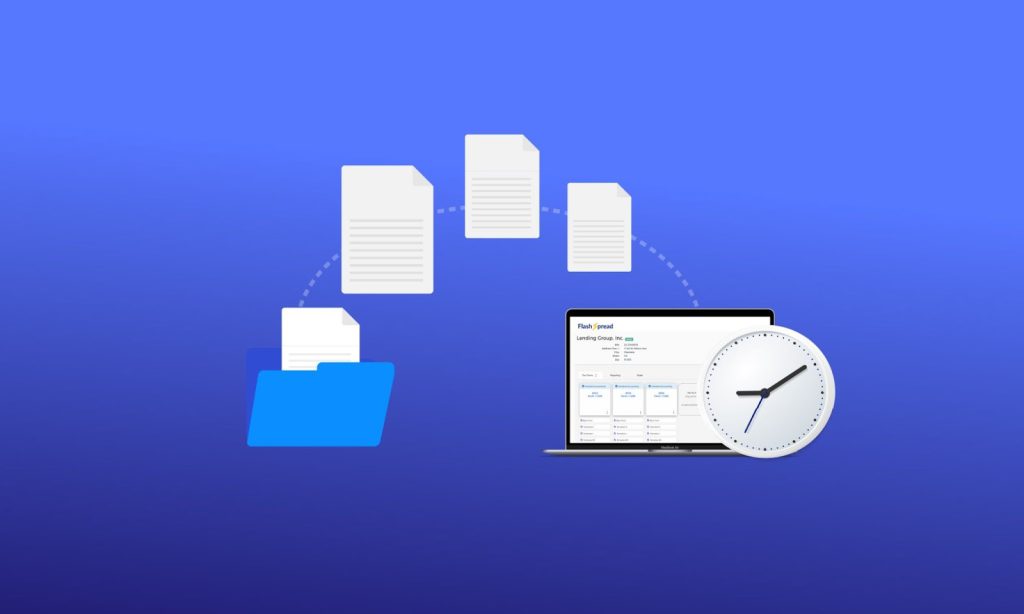
It functions as an AI-powered assistant trained on an institution’s credit policies and internal documentation. Rather than manually searching through files or escalating repetitive questions, analysts can ask policy questions through embedded web chat, SMS, or email and receive fast, accurate, source-cited answers drawn from approved content.
This approach provides several structural advantages:
- Source-Cited Responses: Answers reference the specific policy language, improving transparency and audit readiness.
- Multi-Policy Decisioning: Questions can be evaluated across multiple policy documents simultaneously, reducing interpretation gaps.
- Human-in-the-Loop Escalation: When the system encounters uncertainty, it escalates to the appropriate subject matter expert, captures their response, and incorporates it into future answers.
- Reduced Repetitive Q&A: Approximately 90% of repetitive credit policy questions can be automated, lowering cost per answer and improving desk efficiency.
Importantly, the objective is not to replace human judgment. It is to make policy interpretation more consistent and accessible at scale.
Implementation is structured to minimize disruption. Institutions can connect existing policy sources such as SharePoint, Google Drive, or WordPress, normalize guidelines for reliability, and deploy delivery through chat, SMS, or email, which often goes live in weeks. This transforms policy from static documentation into active guidance.
From Static Documents to Living Infrastructure
Policy consistency requires more than well-written documentation. It requires a system that ensures answers are:
- Accessible in real time
- Context-aware
- Traceable
- Continuously improved
Underwriting intelligence converts policy into operational infrastructure. It reduces reliance on memory, minimizes interpretation variability, and preserves institutional expertise even as teams evolve.
When answers are standardized and source-cited, decision-making becomes more predictable. When repetitive questions are automated, SMEs regain capacity for complex judgment. When escalation responses are captured structurally, institutional knowledge compounds rather than dissipates.
The result is tighter alignment between written standards and actual credit behavior.
Roundup
Most institutions believe their credit policy is being followed consistently. And in principle, it is. However, consistency depends not only on policy clarity but on accessibility at the moment of decision.
When answers remain dispersed across documents and individuals, subtle interpretation drift becomes inevitable. Over time, that drift affects operational efficiency, governance transparency, and risk posture.
By implementing underwriting intelligence as structured infrastructure, credit teams can close the gap between documented standards and daily decisions. Policy becomes usable guidance rather than static reference material.
If policy accessibility is limiting consistency within your credit desk, it may be time to strengthen how underwriting intelligence is delivered. Explore how FlashSpread helps align real-world decisions with written standards—efficiently, consistently, and with full visibility.